Walk through any neighborhood with solar panels gleaming on rooftops, and you'll see the visible face of the renewable energy transition. But behind those silent, sun-catching arrays lies a complex web of challenges and innovations that rarely make headlines. From mountains of discarded panels to farmers growing crops beneath solar canopies, the solar industry is evolving in ways that defy simple narratives.
Let's start with the elephant in the room: waste. With solar installations booming globally, we're creating what one industry insider calls "the renewable energy's dirty little secret." By 2050, the International Renewable Energy Agency estimates we'll have 78 million metric tons of solar panel waste. That's not just an environmental headache—it's a massive economic opportunity waiting to be tapped. Companies are now developing processes to recover 95% of a panel's materials, from silver and silicon to aluminum and glass. But here's the kicker: current recycling rates hover around 10%. The gap between what's possible and what's happening tells a story of regulatory lag and market failure.
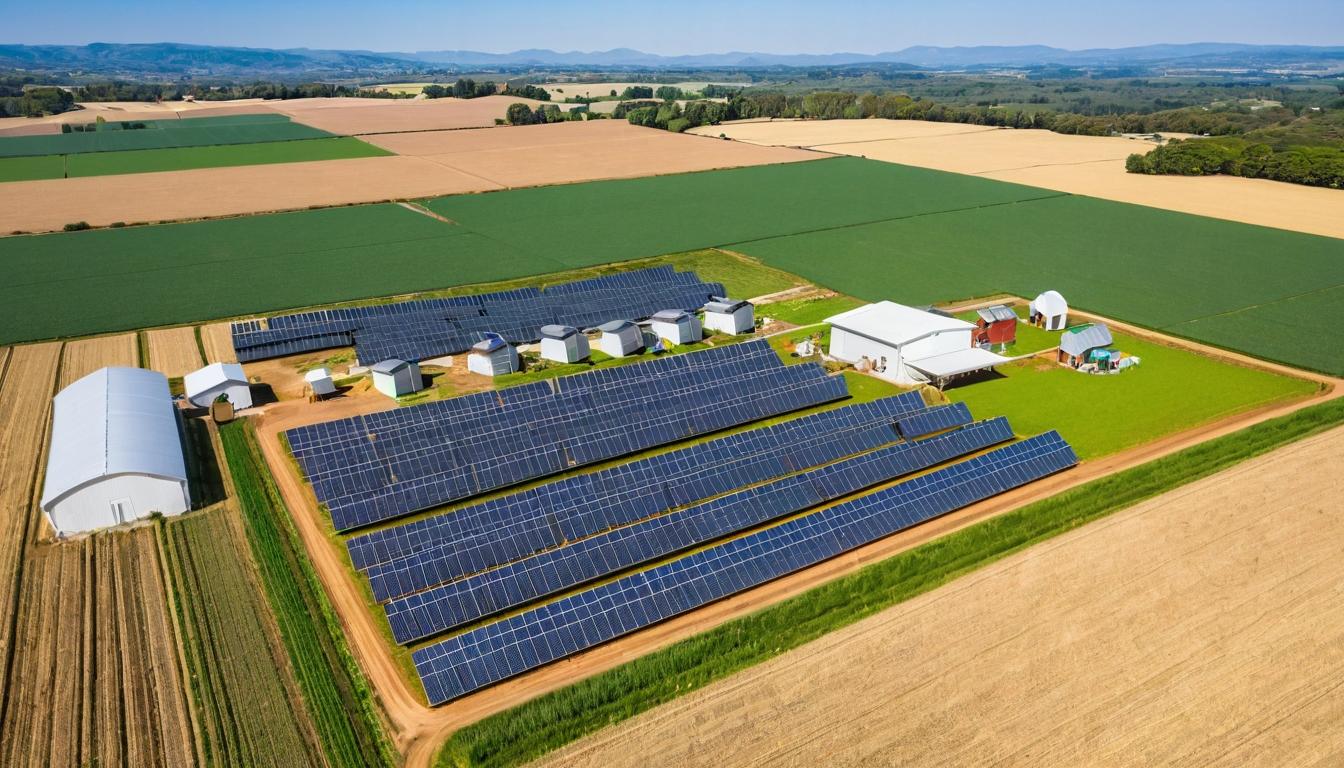
Meanwhile, in fields from California to Japan, farmers are discovering that solar panels and agriculture aren't enemies but allies. The practice called agrivoltaics—growing crops beneath raised solar arrays—is yielding surprising results. Certain shade-tolerant crops actually thrive with partial coverage, requiring less water while producing food and energy on the same land. One study found that cherry tomatoes grown under solar panels needed 14% less water while producing sweeter fruit. This isn't just clever land use; it's a potential solution to the land-use conflicts that have stalled solar projects from New England to the Midwest.
Community solar represents another quiet revolution. For the 50% of Americans who can't install rooftop solar—renters, apartment dwellers, those with shaded roofs—shared solar projects are democratizing access to clean energy. Participants subscribe to portions of larger solar farms, seeing savings on their electricity bills without any upfront costs. The model has grown 121% since 2020, with projects now serving over 5.3 gigawatts nationwide. But the real story isn't in the numbers—it's in the communities transformed. In low-income neighborhoods from Colorado to New York, community solar is cutting energy bills by 10-15%, putting real money back in pockets while reducing carbon footprints.
Technology continues to push boundaries in unexpected directions. Bifacial solar panels, which capture light on both sides, are boosting output by 10-20% over traditional designs. Meanwhile, perovskite solar cells—once laboratory curiosities—are nearing commercial viability with efficiencies rivaling silicon at potentially lower costs. But perhaps the most intriguing development is floating solar, or "floatovoltaics." By installing panels on reservoirs and ponds, developers avoid land-use conflicts while reducing water evaporation by up to 70%. In water-scarce regions, this dual benefit is making previously marginal projects suddenly attractive.
Financing innovation is quietly reshaping who can go solar. Property Assessed Clean Energy (PACE) programs allow homeowners to finance solar installations through property tax assessments, removing credit score barriers. Solar-as-a-service models let businesses adopt solar with zero upfront costs, paying only for the energy produced. And green bonds specifically targeting solar projects have grown from niche instruments to mainstream investments, with over $1 trillion issued globally since 2020.
Yet challenges remain. Interconnection queues—the process of connecting new solar projects to the grid—have grown to over 2,000 gigawatts of waiting projects nationwide, enough to nearly double U.S. electricity generation capacity. Supply chain vulnerabilities exposed during the pandemic continue to haunt developers, with polysilicon prices fluctuating wildly based on geopolitical tensions. And workforce development lags behind demand, with the solar industry needing to train hundreds of thousands of new workers in the coming decade.
The most compelling stories, however, come from the intersections of these trends. Consider the solar farm in Minnesota that combines agrivoltaics with pollinator habitats beneath the panels, boosting nearby crop yields while generating clean energy. Or the community solar project in Illinois that partners with a panel recycling startup, creating a circular economy model from installation to end-of-life. These aren't isolated experiments—they're prototypes for what solar energy could become: not just a source of electricity, but a catalyst for broader environmental and economic regeneration.
What emerges from looking beyond the glossy brochures and simple statistics is a picture of an industry in creative ferment. The solar revolution isn't just about replacing fossil fuels—it's about reimagining how we produce energy, share its benefits, and handle its consequences. From recycling breakthroughs to community ownership models, the most important solar developments aren't always the shiniest or most efficient panels, but the systems and relationships being built around them. The future of solar isn't written in silicon alone, but in the messy, human, endlessly inventive ways we're learning to harness sunlight for a better world.
The solar revolution's hidden costs: How recycling, community power, and agrivoltaics are reshaping clean energy