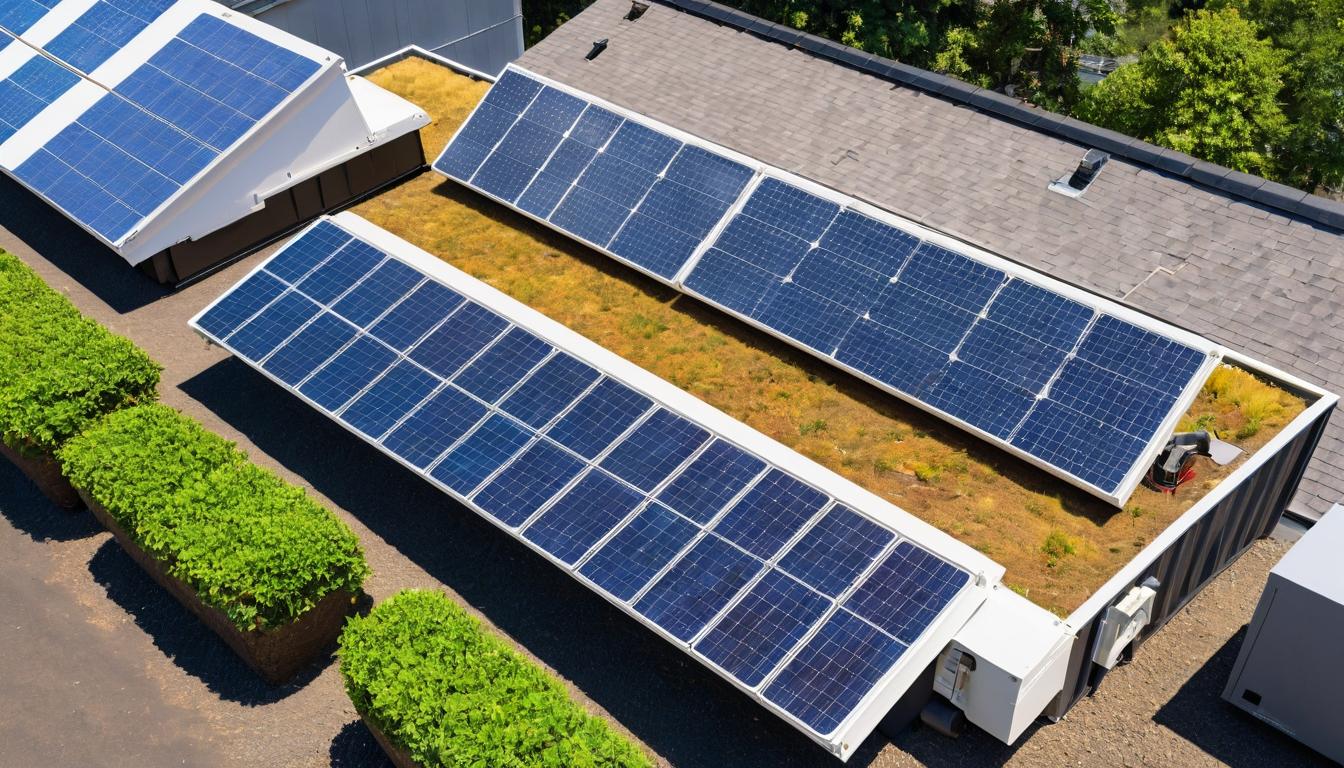
While solar panels glitter on rooftops across America, a quiet revolution is brewing behind the scenes—one that goes far beyond just installing more hardware. The real story isn't about how many megawatts we can add, but how we're reimagining every aspect of solar energy from cradle to grave. From the dusty warehouses where old panels get a second life to the digital dashboards predicting tomorrow's sunshine, the solar industry is undergoing transformations most consumers never see.
Walk into a solar recycling facility, and you'll witness something remarkable: panels that powered homes for decades being carefully disassembled like intricate puzzles. Workers in protective gear extract silicon cells, silver wiring, and aluminum frames—materials worth more than you might think. With millions of panels approaching retirement age, entrepreneurs are building businesses around this emerging waste stream. One facility manager in Arizona showed me how they recover 95% of a panel's materials, turning what was once landfill fodder into raw materials for new electronics. "We're not just recycling," she said, wiping sweat from her brow. "We're mining the urban landscape."
Meanwhile, in neighborhoods from Brooklyn to Berkeley, community solar projects are quietly democratizing energy access. These aren't massive utility-scale farms, but shared arrays that let renters, low-income households, and those with shady roofs buy into solar without installing anything. I spent a week with a community organizer in Minneapolis who helped launch a project powering 150 households. "For years, solar felt like a club for homeowners with south-facing roofs," she explained, pointing to the array on a local church. "Now we're proving sunshine belongs to everyone." The model is spreading faster than most realize, with over 5 gigawatts of community solar now operating nationwide—enough to power nearly a million homes.
Artificial intelligence is transforming solar in ways that feel almost magical. At a control center in California, engineers showed me algorithms that predict cloud movements hours in advance, allowing solar plants to prepare for dips in production. Another company uses machine learning to identify underperforming panels from satellite imagery alone—catching problems before homeowners even notice. "We used to send technicians door-to-door," one operations manager told me. "Now our AI flags issues from space, and we dispatch help before the customer calls." This digital layer is making solar smarter, more reliable, and cheaper to maintain.
The supply chain drama continues behind the headlines. While tariffs and trade disputes grab attention, less noticed are the innovations in manufacturing. Factories are producing panels with half the silver content they used a decade ago, while new designs squeeze more power from less silicon. I toured a research lab where scientists are testing perovskite-silicon tandem cells that could boost efficiency by 50%. "The panel on your roof today will look primitive in five years," one researcher predicted, holding a prototype that shimmered like a butterfly wing.
Perhaps most surprisingly, solar is becoming a grid stabilizer rather than just a power source. In Texas and Australia, large-scale batteries paired with solar farms are responding to grid signals within milliseconds, providing services once reserved for fossil fuel plants. One engineer described it as "teaching sunshine to dance to the grid's rhythm." These hybrid systems are proving that renewables can provide not just energy, but reliability—a crucial shift as grids evolve.
What emerges from these hidden corners of the solar world is a picture of an industry maturing in unexpected ways. It's no longer just about putting panels everywhere; it's about building circular economies, inclusive access models, intelligent systems, and resilient infrastructure. The solar revolution's second act isn't as photogenic as rooftops gleaming in the sun, but it might be more important. As one veteran installer told me while watching a community solar array light up for the first time: "We used to sell hardware. Now we're building ecosystems."
The solar revolution's hidden battleground: How recycling, community power, and AI are reshaping our energy future