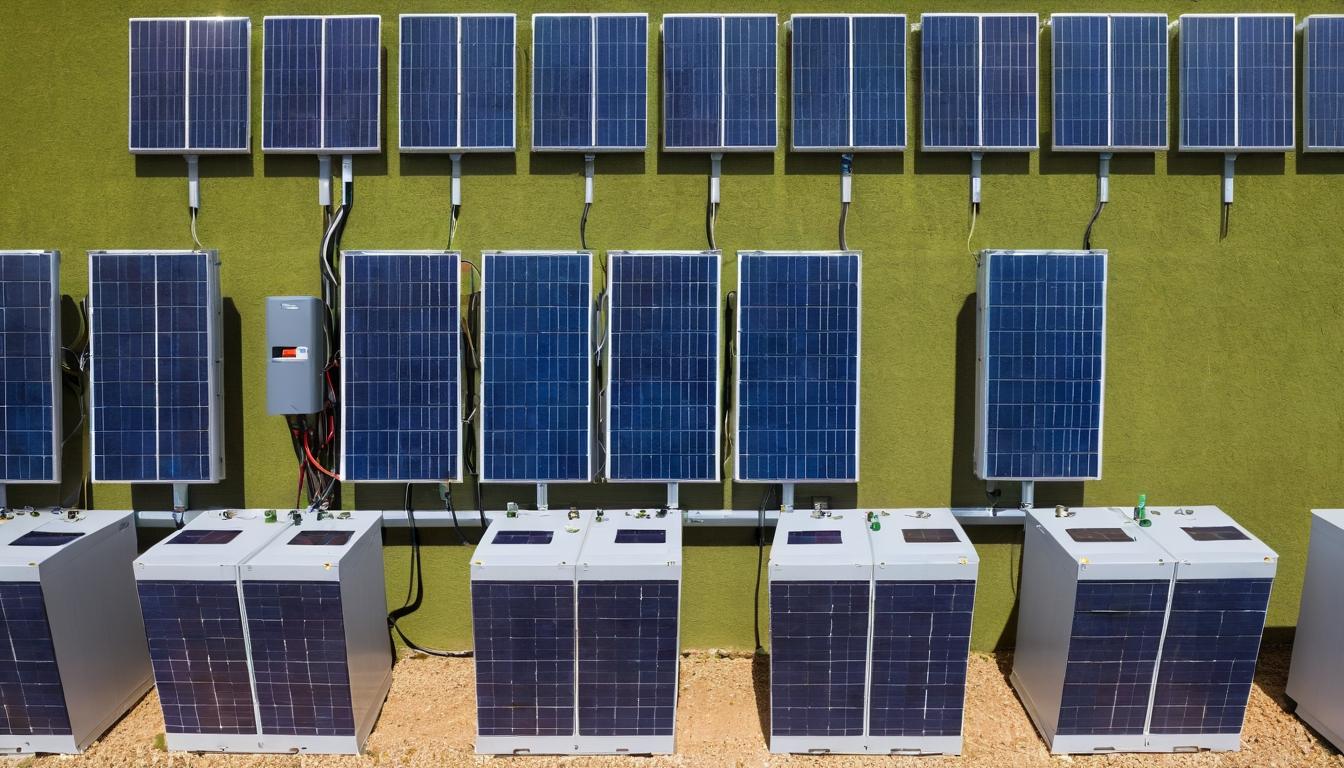
Walking through suburban neighborhoods across America, you might notice something subtle but profound happening. It's not in the headlines, not in political debates, but on rooftops. A quiet transformation is unfolding as solar panels multiply like digital dandelions, changing how we power our lives while most of us aren't even looking.
Behind this surface change lies a deeper story about technology costs that have plummeted faster than anyone predicted. Just a decade ago, solar was the expensive cousin in the energy family—the one you invited to dinner but couldn't afford to support. Today, it's become the practical choice for millions, with installation costs dropping nearly 70% since 2014. This isn't just incremental improvement; it's a wholesale reinvention of energy economics.
The battery revolution running parallel to solar expansion might be even more significant than the panels themselves. While early solar adopters watched their excess energy flow back to the grid for pennies, today's systems increasingly include storage that turns homes into personal power plants. These batteries aren't the clunky lead-acid monsters of yesteryear but sleek lithium-ion units that manage energy with the sophistication of a smartphone.
What's particularly fascinating is how this technology convergence creates new possibilities. Homes can now island themselves during grid outages, communities can form microgrids that operate independently, and the very concept of an electricity bill is being reimagined. The traditional utility model—centralized power flowing one way to passive consumers—is being challenged by a distributed network of prosumers who both consume and produce energy.
Manufacturing innovations are driving much of this change, though they rarely make headlines. Solar panel production has become increasingly automated, with robots handling delicate silicon wafers that human hands once assembled. The efficiency gains aren't just in the panels themselves but in how they're made—factories now produce more power generation capacity per square foot of factory space than ever before.
Policy shifts at state and local levels create a patchwork of opportunities and challenges. Some states embrace solar with net metering policies that fairly compensate homeowners for their excess energy, while others struggle with utilities fighting to maintain their traditional business models. This regulatory tug-of-war creates fascinating regional variations in how quickly solar adoption progresses.
The international dimension adds another layer of complexity. While the U.S. solar industry grows, China's manufacturing dominance creates both supply chain dependencies and geopolitical considerations. Recent trade policies aim to rebuild domestic manufacturing capacity, but the global nature of solar supply chains means isolation isn't really an option.
Commercial and industrial solar represents the next frontier of growth. While residential installations capture public attention, large-scale commercial projects often deliver better economics due to scale. Warehouses, factories, and big-box stores increasingly see their vast rooftops not as empty space but as revenue-generating assets.
Community solar projects offer perhaps the most democratic version of this energy transition. These shared arrays allow renters, apartment dwellers, and those with shaded roofs to participate in solar benefits without installing panels on their own properties. The model turns solar from an individual privilege to a community resource.
Looking forward, the integration of solar with electric vehicles creates a virtuous cycle. EV owners naturally become interested in charging their cars with sunshine rather than grid power, while the cars themselves can potentially serve as mobile batteries for homes. This convergence of transportation and energy represents one of the most exciting developments in the clean tech space.
The workforce development story remains largely untold. As solar expands, it creates jobs not just in installation but in manufacturing, design, maintenance, and finance. These tend to be local jobs that can't be outsourced, representing an economic development opportunity for communities nationwide.
Financing innovations have been just as important as technological ones. Solar leases, power purchase agreements, and new loan products have made going solar accessible to households that couldn't afford the upfront costs of earlier eras. The financial creativity matches the engineering innovation.
As solar penetration increases, grid management becomes both more challenging and more interesting. Utilities must learn to handle intermittent generation, while new software platforms help optimize when to draw from panels, when to use batteries, and when to pull from the grid. This digital layer turns dumb electrons into smart energy.
The environmental benefits extend beyond carbon reduction. Solar farms can coexist with agriculture through agrivoltaics, where crops grow beneath raised panels. The partial shading sometimes improves crop yields while generating clean energy—a elegant solution to land use conflicts.
What's most striking about this transition is its organic nature. Unlike top-down energy projects of the past, solar spreads through individual decisions made by homeowners, businesses, and communities. It's a distributed revolution that builds resilience while reducing emissions—a rare win-win in the complex world of energy policy.
The future likely holds even more integration—solar windows, building-integrated photovoltaics, and floating solar arrays on reservoirs. Each innovation makes solar more ubiquitous while making it disappear into the built environment. The ultimate success of solar may come when we stop noticing it because it's simply how buildings work.
This quiet revolution won't solve all our energy challenges overnight, but it represents a fundamental shift in how we think about power—from something we buy to something we create, from centralized to distributed, from scarce to abundant. And it's happening right now, one rooftop at a time.
The silent revolution reshaping our energy landscape