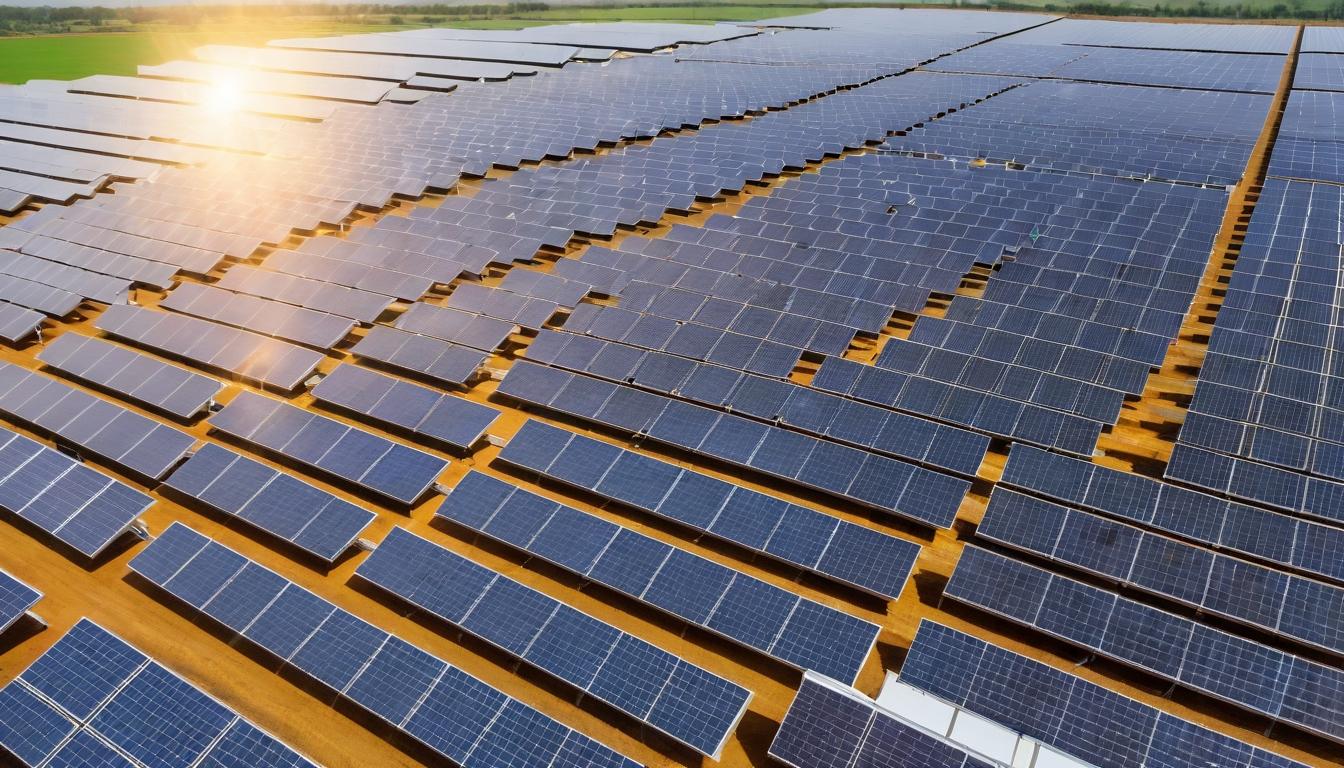
Walking through a solar farm in the Nevada desert, the first thing that strikes you isn't the gleaming panels stretching toward the horizon—it's the silence. No roaring turbines, no belching smokestacks, just the quiet hum of electrons flowing through wires. This tranquility masks a technological revolution happening beneath the surface, one that's fundamentally changing how we think about solar energy.
While most people picture rooftop panels when they imagine solar power, the real transformation is occurring at utility scale. Massive solar farms are becoming increasingly sophisticated power plants, incorporating advanced inverters, battery storage systems, and AI-driven optimization software. These aren't just collections of panels anymore—they're intelligent energy systems capable of responding to grid demands in real-time.
The battery storage revolution might be the most significant development nobody's talking about. Lithium-ion batteries have dominated headlines, but behind the scenes, flow batteries, compressed air storage, and even gravity-based systems are making surprising progress. These technologies could solve solar's biggest challenge: what happens when the sun doesn't shine. The breakthrough isn't just in storage capacity but in how quickly these systems can respond to grid fluctuations—some can go from zero to full power in milliseconds.
Manufacturing innovations are driving down costs in ways that seemed impossible just five years ago. Perovskite solar cells, once confined to laboratory demonstrations, are now entering commercial production with efficiency rates that challenge traditional silicon panels. The manufacturing process uses less energy and fewer rare materials, addressing both economic and environmental concerns simultaneously. What's particularly exciting is how these new technologies can be integrated with existing silicon panels, creating hybrid systems that capture more of the solar spectrum.
Digitalization is transforming solar operations from art to science. Advanced monitoring systems now track performance at the individual panel level, identifying issues before they become problems. Machine learning algorithms optimize panel angles throughout the day, accounting for weather patterns and energy demand. The result isn't just more electricity—it's more predictable, reliable power that grid operators can count on.
The supply chain story reads like a geopolitical thriller. While China currently dominates solar manufacturing, new production facilities are emerging in Southeast Asia, India, and even the United States. Trade policies, shipping costs, and raw material availability create a constantly shifting landscape that keeps industry executives awake at night. The push for domestic manufacturing isn't just about jobs—it's about energy security in an increasingly unstable world.
Community solar represents another quiet revolution. These projects allow people who can't install rooftop panels—renters, apartment dwellers, those with shaded roofs—to benefit from solar energy. The model is spreading rapidly, with innovative financing making it accessible to low-income households. The success of these programs demonstrates that solar's future isn't just technological—it's social and economic.
Floating solar farms are solving land use challenges in creative ways. By installing panels on reservoirs, lakes, and even coastal waters, developers are finding space without competing with agriculture or natural habitats. The water actually helps cool the panels, increasing efficiency, while the panels reduce evaporation—a perfect synergy that benefits both energy production and water conservation.
The interconnection queue tells a fascinating story about solar's rapid growth. Across the United States, thousands of solar projects are waiting to connect to the grid, representing more capacity than the entire existing U.S. power plant fleet. The bottleneck isn't technology or financing—it's the physical and regulatory infrastructure needed to bring all this new power online. Solving this challenge requires rethinking how we plan, build, and operate our electrical grids.
Agricultural integration represents perhaps the most promising frontier. Agrivoltaics—the practice of combining solar panels with crop production—is showing remarkable results. Certain crops actually grow better in the partial shade provided by elevated panels, while farmers benefit from additional revenue streams. This isn't just coexistence—it's symbiosis, with solar panels and agriculture helping each other thrive.
The workforce development challenge looms large as the industry expands. Training programs are scrambling to produce enough installers, technicians, and engineers to meet growing demand. The jobs aren't just in installation—they're in manufacturing, software development, project management, and maintenance. This represents one of the largest employment opportunities in the clean energy transition.
Looking ahead, the most exciting developments might be in materials science. Transparent solar panels that can turn windows into power generators, flexible panels that can be integrated into building materials, and even solar paint that captures energy from any surface—these technologies could make solar collection ubiquitous rather than something we deliberately install.
The revolution isn't happening in one dramatic moment but through thousands of incremental advances across multiple fronts. From manufacturing floors to research laboratories, from desert solar farms to urban rooftops, the pieces are coming together for a transformation that could fundamentally reshape how we power our world. The quiet hum of those Nevada solar panels masks not just flowing electrons but the sound of the future arriving.
The invisible revolution transforming solar energy from panels to power plants