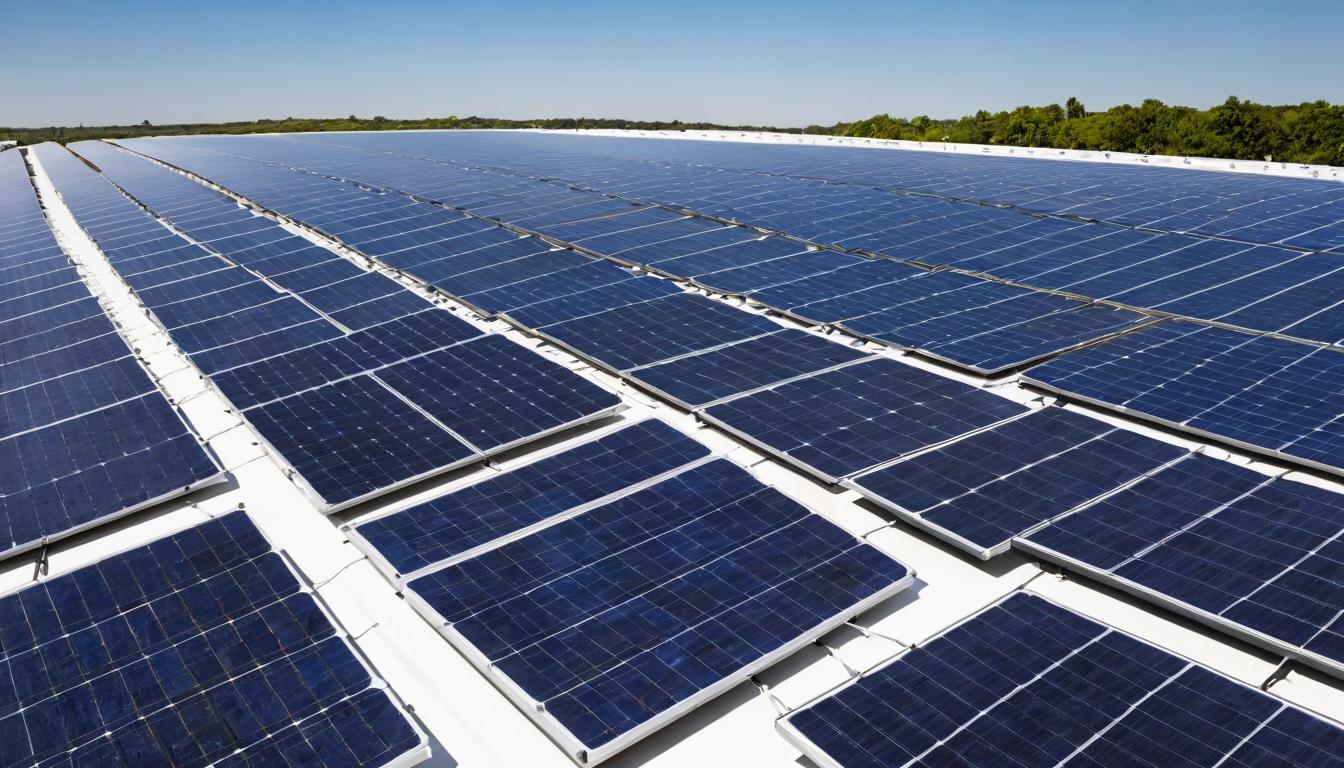
If you think solar panels are just for rooftops, you haven't been paying attention. While residential installations still dominate headlines, a quiet revolution is happening in places most people never see—from the humming data centers powering our digital lives to remote communities rebuilding after disasters. This isn't about saving a few dollars on electricity bills anymore; it's about reimagining how we power civilization itself.
Take data centers, those energy-hungry behemoths that keep the internet running. Companies like Google and Microsoft are now deploying solar canopies over parking lots and adjacent land, creating what insiders call 'micro-grids within the grid.' These installations don't just offset power consumption—they're becoming primary energy sources during peak hours, with battery storage smoothing out the intermittent nature of sunlight. The real breakthrough? Solar is now cheaper than traditional backup generators for these critical facilities, making resilience an economic decision rather than just a precaution.
Meanwhile, in disaster zones from Puerto Rico to California wildfire country, solar-plus-storage systems are proving more reliable than century-old grid infrastructure. When Hurricane Maria wiped out Puerto Rico's grid, solar microgrids kept hospitals running and water purification systems operating. What started as emergency response has become permanent infrastructure, with communities opting to stay off the main grid entirely. 'We're seeing a shift from solar as supplemental to solar as essential,' says one relief coordinator who asked not to be named. 'People who lived through blackouts don't want to go back.'
But perhaps the most surprising development is happening underwater. Floating solar arrays—dubbed 'floatovoltaics'—are multiplying on reservoirs, wastewater treatment ponds, and even offshore. These installations solve two problems at once: they generate clean energy without using valuable land, while reducing water evaporation by up to 70%. In water-scarce regions like California and Spain, that secondary benefit is sometimes more valuable than the electricity itself. The technology has advanced so rapidly that engineers are now testing wave-resistant designs for open ocean deployment, potentially unlocking vast new areas for solar generation.
Behind these visible changes, a materials revolution is accelerating. Perovskite solar cells, long confined to laboratories, are finally entering commercial production. These ultra-thin, flexible panels can be printed like newspaper and applied to surfaces traditional panels can't touch—think car roofs, building facades, even clothing. Early adopters include electric vehicle manufacturers integrating solar directly into sunroofs, adding 20-30 miles of range per day from sunlight alone. The efficiency gains are staggering: where silicon panels plateau around 22%, perovskite-silicon tandem cells recently hit 33% in lab tests, with commercial versions expected within two years.
Yet for all this progress, challenges remain. The solar industry's dirty secret? Its supply chain still relies heavily on coal-fired power in manufacturing hubs like Xinjiang, China. New traceability initiatives using blockchain technology aim to certify truly clean solar panels, but adoption has been slow. Meanwhile, recycling remains an afterthought—less than 10% of decommissioned panels get properly recycled today. As installations from the early 2000s reach end-of-life, this could create a waste crisis unless the industry acts quickly.
The most intriguing development might be solar's unexpected allies. Oil companies, once solar's fiercest opponents, are now among its biggest investors. BP and Shell are deploying solar at refineries and pumping stations, not for greenwashing but for simple economics: sunlight is free, and the technology works. Even utilities that fought net metering are embracing 'community solar' programs that let renters and low-income households access solar benefits without rooftop installations. This isn't just about clean energy anymore—it's about democratizing energy production itself.
What emerges from these disparate threads is a picture of an industry that's matured beyond its idealistic origins. Solar is no longer just an alternative energy source; it's becoming the default solution for problems we haven't even fully articulated yet. From powering AI data centers to reviving hurricane-ravaged communities, the technology is proving more versatile than its creators imagined. The panels on your neighbor's roof are just the most visible part of a transformation that's quietly rewriting the rules of energy, resilience, and even geopolitics. And if current trends hold, we've only seen the first flickers of what sunlight can do.
The hidden revolution: how solar energy is quietly transforming everything from data centers to disaster relief